and so feel that he is in communion with the natural laws.” -John Coltrane
Friday, January 28, 2011

Thursday, January 13, 2011


Tuesday, January 11, 2011
Snyder's Etiquette and Momaday's Rainy Mountain
Consider:
Snyder’s “Etiquette of Freedom” and Momaday’s “Rainy mountain” are parallel considerations of our place in nature. Both offer a language through which we might engage our relationship with the world. How do the languages of these texts compare, how do their culturally specific terms offer a new beginning (a la Lopez) or continuation for a (new) ecological consciousness and culture?
MOMADAY, RAINY MOUNTAIN
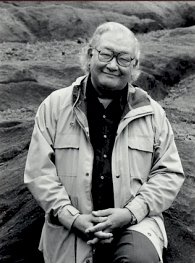
And consider then, Momaday’s book The Way to Rainy Mountain…what is the function of the Prologue, of the Introduction to the book? How does this book cross into the territory that Snyder defines? How does Momaday tell his story through his community? What is Rainy Mountain and what is meant by the Way there?
Snyder’s “Etiquette of Freedom” and Momaday’s “Rainy mountain” are parallel considerations of our place in nature. Both offer a language through which we might engage our relationship with the world. How do the languages of these texts compare, how do their culturally specific terms offer a new beginning (a la Lopez) or continuation for a (new) ecological consciousness and culture?
MOMADAY, RAINY MOUNTAIN
And consider then, Momaday’s book The Way to Rainy Mountain…what is the function of the Prologue, of the Introduction to the book? How does this book cross into the territory that Snyder defines? How does Momaday tell his story through his community? What is Rainy Mountain and what is meant by the Way there?
Monday, January 10, 2011
Sunday, January 09, 2011
Barry Lopez THE REDISCOVERY OF NORTH AMERICA
The first few short chapters of this small book address the
exploitative single mindedness that Christopher Columbus’
“discovery” of North America transported across the Atlantic
and that defined the terms of engagement with the new land
and its inhabitants. Lopez proposes that our existence here,
on this continent, is marked by this first encounter and little
has been done to alter the course as it was set back then, over
500 years ago. He defines the relationship as one in which
“instead of an encounter with ‘the other’ in which we proposed
certain ideas, proposals based on assumptions of equality,
respectfully tendered, our encounters were distinguished by
a stern, relentless imposition of ideas – religious, economic,
and social ideas we deemed superior if not unimpeachable.” (17)
Aside from locating us aboard Columbus’ ship as it neared
the “new world”, Lopez has us imagine what it might have been
like to have been a crew member, a common person, aboard
the ship. Someone employed to support the discovery and
exploitation, yet someone not directly rewarded for his actions
and in turn exploited because of his social status. The author
asks us to imagine the new world, its new life forms, its new
landscape with its inhabitants; and he asks us to imagine how
one faced with such novelty and beauty might remain blind
to it.
Reading on, Lopez takes us into a closer consideration of the
results of the voyage of discovery and the subsequent
settlement of the new world. Once we are brought into closer
proximity to the context he proposes, Lopez further asks us to
reconsider a series of vocabulary words the meaning of which
seems to have been lost or altered to support the erasure of
historical memory. The words include imagination, time, wealth,
residence, habitation, community, local knowledge, along with
the names of plants, animals, peoples, their localities, languages
and cultural traditions. All of these terms gravitate around what
we might come to consider as “a sense of place”, or querencia.
Querencia “refers to a place on the ground where one feels secure,
a place from which one’s strength of character is drawn. It comes
from the verb querer, to desire, but this verb also carries the sense
of accepting a challenge, as in a game.” (39) Finally, given this
definition, this term, this term of reference and residence we must
ask ourselves if we in fact feel secure in the place in which we
have come to rest, if we can call this place our own and, if we
in fact feel the slightest sense of discomfort there, are we up to
the challenge that it offers to make it a better place.
exploitative single mindedness that Christopher Columbus’
“discovery” of North America transported across the Atlantic
and that defined the terms of engagement with the new land
and its inhabitants. Lopez proposes that our existence here,
on this continent, is marked by this first encounter and little
has been done to alter the course as it was set back then, over
500 years ago. He defines the relationship as one in which
“instead of an encounter with ‘the other’ in which we proposed
certain ideas, proposals based on assumptions of equality,
respectfully tendered, our encounters were distinguished by
a stern, relentless imposition of ideas – religious, economic,
and social ideas we deemed superior if not unimpeachable.” (17)
Aside from locating us aboard Columbus’ ship as it neared
the “new world”, Lopez has us imagine what it might have been
like to have been a crew member, a common person, aboard
the ship. Someone employed to support the discovery and
exploitation, yet someone not directly rewarded for his actions
and in turn exploited because of his social status. The author
asks us to imagine the new world, its new life forms, its new
landscape with its inhabitants; and he asks us to imagine how
one faced with such novelty and beauty might remain blind
to it.
Reading on, Lopez takes us into a closer consideration of the
results of the voyage of discovery and the subsequent
settlement of the new world. Once we are brought into closer
proximity to the context he proposes, Lopez further asks us to
reconsider a series of vocabulary words the meaning of which
seems to have been lost or altered to support the erasure of
historical memory. The words include imagination, time, wealth,
residence, habitation, community, local knowledge, along with
the names of plants, animals, peoples, their localities, languages
and cultural traditions. All of these terms gravitate around what
we might come to consider as “a sense of place”, or querencia.
Querencia “refers to a place on the ground where one feels secure,
a place from which one’s strength of character is drawn. It comes
from the verb querer, to desire, but this verb also carries the sense
of accepting a challenge, as in a game.” (39) Finally, given this
definition, this term, this term of reference and residence we must
ask ourselves if we in fact feel secure in the place in which we
have come to rest, if we can call this place our own and, if we
in fact feel the slightest sense of discomfort there, are we up to
the challenge that it offers to make it a better place.
Saturday, January 08, 2011
KEY WORDS

Some Words to Consider in their meaning and usage.
What is Nature? Where is Nature?
What is Nature? Where is Nature?
Nature: one of the most complex words in the English language. Three branches of meaning 1. the essential quality and character of something 2. an inherent force which guides the world or humans 3. the material world itself, with or without human beings. Comes from the a root of nasci (L) meaning to be born which bestows upon it a sense of quality and process before becoming an independent noun. The branch of meaning related to an inherent force is also tied to the presence of a single prime cause...God and as such also the source of natural laws...the constitution of the world, universal and constant recurring force...
The 18th C bring about Nature as the "countryside" as an opposition to the town...nature is what man has not made...Nature-lover and nature-poetry date from this period.
As an expression of the "natural world" NATURE is problematic in the sense that it is difficult to view it objectively without overlaying upon it a conditioned eye. Nature can become an overly romanticized place that nevertheless lies outside of our immediate experience and canno therefore be known except through a mediated eye.
Nature is contrasted to man-made things…which we can eventually extrapolate to be natural since they are part and parcel of man’s “nature” to build, invent and construct.
Culture: This too a complicated word in the language, it also contains a sense of quality and process...it is accompanied by a sense of selection toward making something the norm. To cultivate is to prepare, groom, and selectively help blossom...agriculture therefore is a direct relative to culture as a process of preparing the ground for the proper propagation and production of a final product. Culture, as the aesthetic and intellectual construct we term “ours”…and the nourishing habitat of a “yogurt culture” (Snyder’s example).
Wild, a term that Gary Snyder couples with Free to generate “an American dream-phrase”. And he continues that to be “truly Free one must take on the basic conditions as they are – painful, impermanent, open, imperfect – and then be grateful for impermanence and they freedom it grants us. For in a fixed universe there would be no freedom.”
Wilderness/Wildness, are the places we don’t inhabit, that we set aside as parks and reserves for the former; wildness however can be said to be everywhere. And, possibly, even as wilderness diminishes all around us, wildness might continue to survive all around us. So wildness could be considered a term of energetic life force, a sense of vitality and vibrancy, that is of the natural environment.
Environmental Footprint: The amount of resources consumed by an individual. Does not indicate a "vital" level of consumption, merely consumption. Beginning with the assumption that there are world wide 4.5 biologically productive acres/person, we then calculate what our personal consumption is in relation to that. "The average ecological footprint in the United States is 24 acres per person."...which gives us a good indication of our position as consumers in the world.
Ecological Intelligence: Inversely related to the environmental footprint. Ecological intelligence is founded/developed upon our "conception of place", our relationship to the world and its resources and the recognition that we are dealing with a finite system of interdependent factors. Eco intelligence develops with recognition of interdependence and the increased ability to recognize and learn "the native language of the region."
Saturday, April 24, 2010
Emerson's NATURE
INTRODUCTION
Our age is retrospective. It builds the sepulchres of the fathers. It writes biographies, histories, and criticism. The foregoing generations beheld God and nature face to face; we, through their eyes . Why should not we also enjoy an original relation to the universe? Why should not we have a poetry and philosophy of insight and not of tradition, and a religion by revelation to us, and not the history of theirs? Embosomed for a season in nature, whose floods of life stream around and through us, and invite us by the powers they supply, to action proportioned to nature, why should we grope among the dry bones of the past, or put the living generation into masquerade out of its faded wardrobe? The sun shines to-day also. There is more wool and flax in the fields. There are new lands, new men, new thoughts. Let us demand our own works and laws and worship.
Undoubtedly we have no questions to ask which are unanswerable . We must trust the perfection of the creation so far, as to believe that whatever curiosity the order of things has awakened in our minds, the order of things can satisfy. Every man's condition is a solution in hieroglyphic to those inquiries he would put. He acts it as life, before he apprehends it as truth. In like manner, nature is already, in its forms and tendencies, describing its own design. Let us interrogate the great apparition, that shines so peacefully around us. Let us inquire, to what end is nature?
All science has one aim, namely, to find a theory of nature. We have theories of races and of functions, but scarcely yet a remote approach to an idea of creation. We are now so far from the road to truth, that religious teachers dispute and hate each other, and speculative men are esteemed unsound and frivolous. But to a sound judgment, the most abstract truth is the most practical. Whenever a true theory appears, it will be its own evidence. Its test is, that it will explain all phenomena. Now many are thought not only unexplained but inexplicable; as language, sleep, madness, dreams, beasts, sex.
Philosophically considered, the universe is composed of Nature and the Soul. Strictly speaking, therefore, all that is separate from us, all which Philosophy distinguishes as the NOT ME, that is, both nature and art, all other men and my own body, must be ranked under this name, NATURE. In enumerating the values of nature and casting up their sum, I shall use the word in both senses; -- in its common and in its philosophical import. In inquiries so general as our present one, the inaccuracy is not material; no confusion of thought will occur. Nature, in the common sense, refers to essences unchanged by man; space, the air, the river, the leaf. Art is applied to the mixture of his will with the same things, as in a house, a canal, a statue, a picture. But his operations taken together are so insignificant , a little chipping, baking, patching, and washing, that in an impression so grand as that of the world on the human mind, they do not vary the result.
Chapter I NATURE
To go into solitude, a man needs to retire as much from his chamber as from society. I am not solitary whilst I read and write, though nobody is with me. But if a man would be alone, let him look at the stars. The rays that come from those heavenly worlds, will separate between him and what he touches. One might think the atmosphere was made transparent with this design, to give man, in the heavenly bodies, the perpetual presence of the sublime. Seen in the streets of cities, how great they are! If the stars should appear one night in a thousand years, how would men believe and adore; and preserve for many generations the remembrance of the city of God which had been shown! But every night come out these envoys of beauty, and light the universe with their admonishing smile.
The stars awaken a certain reverence, because though always present, they are inaccessible; but all natural objects make a kindred impression, when the mind is open to their influence. Nature never wears a mean appearance. Neither does the wisest man extort her secret, and lose his curiosity by finding out all her perfection. Nature never became a toy to a wise spirit. The flowers, the animals, the mountains, reflected the wisdom of his best hour, as much as they had delighted the simplicity of his childhood.
When we speak of nature in this manner, we have a distinct but most poetical sense in the mind. We mean the integrity of impression made by manifold natural objects. It is this which distinguishes the stick of timber of the wood-cutter, from the tree of the poet. The charming landscape which I saw this morning, is indubitably made up of some twenty or thirty farms. Miller owns this field, Locke that, and Manning the woodland beyond. But none of them owns the landscape. There is a property in the horizon which no man has but he whose eye can integrate all the parts, that is, the poet. This is the best part of these men's farms, yet to this their warranty-deeds give no title.
To speak truly, few adult persons can see nature. Most persons do not see the sun. At least they have a very superficial seeing. The sun illuminates only the eye of the man, but shines into the eye and the heart of the child. The lover of nature is he whose inward and outward senses are still truly adjusted to each other; who has retained the spirit of infancy even into the era of manhood. His intercourse with heaven and earth, becomes part of his daily food. In the presence of nature, a wild delight runs through the man, in spite of real sorrows. Nature says, -- he is my creature, and maugre all his impertinent griefs, he shall be glad with me. Not the sun or the summer alone, but every hour and season yields its tribute of delight; for every hour and change corresponds to and authorizes a different state of the mind, from breathless noon to grimmest midnight. Nature is a setting that fits equally well a comic or a mourning piece. In good health, the air is a cordial of incredible virtue. Crossing a bare common, in snow puddles, at twilight, under a clouded sky, without having in my thoughts any occurrence of special good fortune, I have enjoyed a perfect exhilaration.I am glad to the brink of fear. In the woods too, a man casts off his years, as the snake his slough , and at what period soever of life, is always a child. In the woods, is perpetual youth. Within these plantations of God, a decorum and sanctity reign, a perennial festival is dressed, and the guest sees not how he should tire of them in a thousand years. In the woods, we return to reason and faith. There I feel that nothing can befall me in life, -- no disgrace, no calamity, (leaving me my eyes,) which nature cannot repair. Standing on the bare ground, -- my head bathed by the blithe air, and uplifted into infinite space, -- all mean egotism vanishes. I become a transparent eye-ball; I am nothing; I see all; the currents of the Universal Being circulate through me; I am part or particle of God. The name of the nearest friend sounds then foreign and accidental: to be brothers, to be acquaintances, -- master or servant, is then a trifle and a disturbance. I am the lover of uncontained and immortal beauty.In the wilderness, I find something more dear and connate than in streets or villages. In the tranquil landscape, and especially in the distant line of the horizon, man beholds somewhat as beautiful as his own nature.
The greatest delight which the fields and woods minister, is the suggestion of an occult relation between man and the vegetable. I am not alone and unacknowledged. They nod to me, and I to them. The waving of the boughs in the storm, is new to me and old. It takes me by surprise, and yet is not unknown. Its effect is like that of a higher thought or a better emotion coming over me, when I deemed I was thinking justly or doing right.
Yet it is certain that the power to produce this delight, does not reside in nature, but in man, or in a harmony of both. It is necessary to use these pleasures with great temperance. For, nature is not always tricked in holiday attire, but the same scene which yesterday breathed perfume and glittered as for the frolic of the nymphs, is overspread with melancholy today. Nature always wears the colors of the spirit . To a man laboring under calamity, the heat of his own fire hath sadness in it. Then, there is a kind of contempt of the landscape felt by him who has just lost by death a dear friend. The sky is less grand as it shuts down over less worth in the population.
Click on the title to go to Trancendentalism Website and the rest of "Nature"
Our age is retrospective. It builds the sepulchres of the fathers. It writes biographies, histories, and criticism. The foregoing generations beheld God and nature face to face; we, through their eyes . Why should not we also enjoy an original relation to the universe? Why should not we have a poetry and philosophy of insight and not of tradition, and a religion by revelation to us, and not the history of theirs? Embosomed for a season in nature, whose floods of life stream around and through us, and invite us by the powers they supply, to action proportioned to nature, why should we grope among the dry bones of the past, or put the living generation into masquerade out of its faded wardrobe? The sun shines to-day also. There is more wool and flax in the fields. There are new lands, new men, new thoughts. Let us demand our own works and laws and worship.
Undoubtedly we have no questions to ask which are unanswerable . We must trust the perfection of the creation so far, as to believe that whatever curiosity the order of things has awakened in our minds, the order of things can satisfy. Every man's condition is a solution in hieroglyphic to those inquiries he would put. He acts it as life, before he apprehends it as truth. In like manner, nature is already, in its forms and tendencies, describing its own design. Let us interrogate the great apparition, that shines so peacefully around us. Let us inquire, to what end is nature?
All science has one aim, namely, to find a theory of nature. We have theories of races and of functions, but scarcely yet a remote approach to an idea of creation. We are now so far from the road to truth, that religious teachers dispute and hate each other, and speculative men are esteemed unsound and frivolous. But to a sound judgment, the most abstract truth is the most practical. Whenever a true theory appears, it will be its own evidence. Its test is, that it will explain all phenomena. Now many are thought not only unexplained but inexplicable; as language, sleep, madness, dreams, beasts, sex.
Philosophically considered, the universe is composed of Nature and the Soul. Strictly speaking, therefore, all that is separate from us, all which Philosophy distinguishes as the NOT ME, that is, both nature and art, all other men and my own body, must be ranked under this name, NATURE. In enumerating the values of nature and casting up their sum, I shall use the word in both senses; -- in its common and in its philosophical import. In inquiries so general as our present one, the inaccuracy is not material; no confusion of thought will occur. Nature, in the common sense, refers to essences unchanged by man; space, the air, the river, the leaf. Art is applied to the mixture of his will with the same things, as in a house, a canal, a statue, a picture. But his operations taken together are so insignificant , a little chipping, baking, patching, and washing, that in an impression so grand as that of the world on the human mind, they do not vary the result.
Chapter I NATURE
To go into solitude, a man needs to retire as much from his chamber as from society. I am not solitary whilst I read and write, though nobody is with me. But if a man would be alone, let him look at the stars. The rays that come from those heavenly worlds, will separate between him and what he touches. One might think the atmosphere was made transparent with this design, to give man, in the heavenly bodies, the perpetual presence of the sublime. Seen in the streets of cities, how great they are! If the stars should appear one night in a thousand years, how would men believe and adore; and preserve for many generations the remembrance of the city of God which had been shown! But every night come out these envoys of beauty, and light the universe with their admonishing smile.
The stars awaken a certain reverence, because though always present, they are inaccessible; but all natural objects make a kindred impression, when the mind is open to their influence. Nature never wears a mean appearance. Neither does the wisest man extort her secret, and lose his curiosity by finding out all her perfection. Nature never became a toy to a wise spirit. The flowers, the animals, the mountains, reflected the wisdom of his best hour, as much as they had delighted the simplicity of his childhood.
When we speak of nature in this manner, we have a distinct but most poetical sense in the mind. We mean the integrity of impression made by manifold natural objects. It is this which distinguishes the stick of timber of the wood-cutter, from the tree of the poet. The charming landscape which I saw this morning, is indubitably made up of some twenty or thirty farms. Miller owns this field, Locke that, and Manning the woodland beyond. But none of them owns the landscape. There is a property in the horizon which no man has but he whose eye can integrate all the parts, that is, the poet. This is the best part of these men's farms, yet to this their warranty-deeds give no title.
To speak truly, few adult persons can see nature. Most persons do not see the sun. At least they have a very superficial seeing. The sun illuminates only the eye of the man, but shines into the eye and the heart of the child. The lover of nature is he whose inward and outward senses are still truly adjusted to each other; who has retained the spirit of infancy even into the era of manhood. His intercourse with heaven and earth, becomes part of his daily food. In the presence of nature, a wild delight runs through the man, in spite of real sorrows. Nature says, -- he is my creature, and maugre all his impertinent griefs, he shall be glad with me. Not the sun or the summer alone, but every hour and season yields its tribute of delight; for every hour and change corresponds to and authorizes a different state of the mind, from breathless noon to grimmest midnight. Nature is a setting that fits equally well a comic or a mourning piece. In good health, the air is a cordial of incredible virtue. Crossing a bare common, in snow puddles, at twilight, under a clouded sky, without having in my thoughts any occurrence of special good fortune, I have enjoyed a perfect exhilaration.I am glad to the brink of fear. In the woods too, a man casts off his years, as the snake his slough , and at what period soever of life, is always a child. In the woods, is perpetual youth. Within these plantations of God, a decorum and sanctity reign, a perennial festival is dressed, and the guest sees not how he should tire of them in a thousand years. In the woods, we return to reason and faith. There I feel that nothing can befall me in life, -- no disgrace, no calamity, (leaving me my eyes,) which nature cannot repair. Standing on the bare ground, -- my head bathed by the blithe air, and uplifted into infinite space, -- all mean egotism vanishes. I become a transparent eye-ball; I am nothing; I see all; the currents of the Universal Being circulate through me; I am part or particle of God. The name of the nearest friend sounds then foreign and accidental: to be brothers, to be acquaintances, -- master or servant, is then a trifle and a disturbance. I am the lover of uncontained and immortal beauty.In the wilderness, I find something more dear and connate than in streets or villages. In the tranquil landscape, and especially in the distant line of the horizon, man beholds somewhat as beautiful as his own nature.
The greatest delight which the fields and woods minister, is the suggestion of an occult relation between man and the vegetable. I am not alone and unacknowledged. They nod to me, and I to them. The waving of the boughs in the storm, is new to me and old. It takes me by surprise, and yet is not unknown. Its effect is like that of a higher thought or a better emotion coming over me, when I deemed I was thinking justly or doing right.
Yet it is certain that the power to produce this delight, does not reside in nature, but in man, or in a harmony of both. It is necessary to use these pleasures with great temperance. For, nature is not always tricked in holiday attire, but the same scene which yesterday breathed perfume and glittered as for the frolic of the nymphs, is overspread with melancholy today. Nature always wears the colors of the spirit . To a man laboring under calamity, the heat of his own fire hath sadness in it. Then, there is a kind of contempt of the landscape felt by him who has just lost by death a dear friend. The sky is less grand as it shuts down over less worth in the population.
Click on the title to go to Trancendentalism Website and the rest of "Nature"

Friday, April 23, 2010

Sunday, February 28, 2010
Anza Borrego
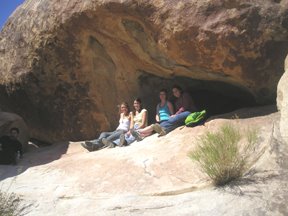
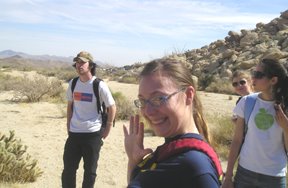
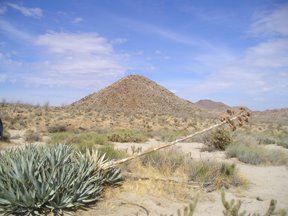
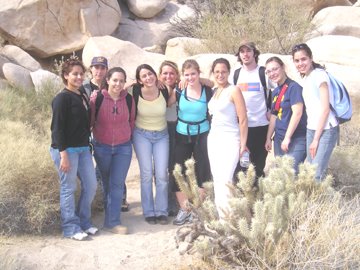
Photos by Christina C.
Environmental Literature class field trip to Anza Borrego Park, Feb. 26, 2006
After so much reading and talking inside the stuffy rooms of the university
we finally get out into the fresh air. Ocotillos, harvester ants, ravens, agaves, sand and stone,
boulders, caves and pictographs...a full day.
Wednesday, October 08, 2008
Wednesday, December 19, 2007


Tuesday, November 20, 2007
The Secret Life of A Cola
From Stuff: The Secret Lives of Everyday Things, by John C. Ryan and Alan Thein Durning, copyright 1997 Northwest Environment Watch, Seattle.
The Oklahoma Department of Environmental Quality is encouraging citizens to think about all the consequences of their consumption through the proclamation of the third Use Less Stuff Week April 19-26, 2003. DEQ has provided a series of articles such as this one based on the book, Stuff--The Secret Lives of Everyday Things by John C. Ryan. When speaking at the Oklahoma Association for Environmental Education's EE Expo in February of last year, Ryan told the crowd, "Confronting resource consumption is North Americans' principal environmental challenge, although few realize this fact because impacts of consumption are mostly invisible to the consumer. The United States, with less than 5 percent of world population, consumes 24 percent of the world's energy and similar shares of other commodities."From Stuff: The Secret Lives of Everyday Things, by John C. Ryan and Alan Thein Durning, copyright 1997 Northwest Environment Watch, Seattle.
This article outlines the "ecological wake" of cola (aka soda pop). Americans drink more water carbonated in soda than they drink plain from the tap. The world drinks about 70 million gallons of soda every day. Following are the resources used to get you that can of pop.
Corn Syrup. The cola contained high-fructose corn syrup from Iowa, a state where even the rain usually contains traces of pesticides. A milling plant used water, enzymes, acids, heat, grinders, and centrifuges to turn corn kernels into starch and then corn syrup. Making syrup is the second largest use of corn in North America; feeding livestock is the largest. On average, Americans consume 48 pounds of corn syrup a year.
To make your cola, the bottling plant combined corn syrup, citric acid, and flavor concentrate (a secret recipe containing flavors, preservatives, caffeine, and artificial coloring) first with water and then with carbon dioxide. The same corn-milling plant in Iowa fermented corn to make the carbon dioxide. The caffeine was a by-product of making decaffeinated coffee.
Bauxite. Your last cola was in an aluminum can weighing 15 grams (about half an ounce). Five grams was recycled from melted-down cans and scrap. The other 10 grams began as 40 grams of bauxite ore in the Australian outback. Massive machines with 15-foot-high tires and shovels big enough to scoop up a car, strip-mined the ore from a thin layer of underground rock. Bauxite mining destroys more surface area than mining of any other ore.
Near the mine, the bauxite was crushed, washed, dried, pulverized, mixed with caustic soda from California, heated, pressurized, settled, filtered, and roasted with calcium oxide from Japan. Forty grams of bauxite yielded 20 grams of the aluminum oxide powder known as alumina, which looks like wet sugar crystals. Most of the caustic soda was captured for reuse. The process also created 16 grams of “red mud”, a skin-burning mixture of oxidized metals and other contaminants. Pipes siphoned the mud to a settling pond, where a fraction of it leached into groundwater.
A Korean freighter hauled the alumina across the Pacific Ocean to the wall of breakers at the Columbia River bar, the four-mile-wide river mouth that Lewis and Clark called “that seven-shouldered horror.” The ship’s captain used sonar and satellite linkups to plot his course through the bar’s chaotic waves and shifting sands. He motored between the two-mile-long jetties. He entered the deep channel dredged into the Columbia’s shallow estuary by the Army Corps of Engineers. Jetties, dikes, and dredges have washed away or filled in two-thirds of the river’s tidal marshes. Tidal marshes and other estuary habitats are nurse beds for aquatic life, sheltering young fish, birds, and many other animals.
Despite all the electronic gadgetry and all the effort to tame the river, the bar--where the misnamed Pacific Ocean and the biggest river on the west coast of the Americas pound against each other--remained the most dangerous part of the freighter’s 24-day journey. Once past the entrance, it was smooth sailing upriver toward the aluminum smelter in eastern Washington.
Smelting. The smelter dissolved the aluminum oxide in giant steel pots filled with a bath of cryolite (sodium aluminum fluoride). Carbon electrodes (made from Alaskan petroleum) were lowered into the pots and delivered a massive 100,000-amp jolt of electricity. The powerful charge broke oxygen atoms away from the aluminum and attached them to the carbon, forming carbon dioxide. Small amounts of fluorine attached to the carbon and escaped the smelter in the form of perfluorocarbons (PFCs)-greenhouse gases that trap thousands of times more heat per molecule than carbon dioxide. Few processes are as damaging to the global climate as aluminum smelting.
Electricity. The smelter ran on purchased hydropower 24 hours a day. The smelter bought the electricity at discount rates from the Bonneville Power Administration (BPA), the Pacific Northwest’s main provider of electricity. BPA markets power from 29 federal dams and a nuclear power plant. Eight of these dams along the main stems of the Columbia and Snake Rivers annually kill millions of young salmon heading to the Pacific. Dams, damaged stream habitats, hatcheries, and overfishing have eliminated more than 97 percent of wild salmon in the Columbia Basin.
Aluminum smelters use almost one-fifth of the electricity sold by BPA, but the eight aluminum smelters in Oregon and Washington provide only about 7,500 jobs--one-tenth of 1 percent of the regional total. The same smelters drink up to 16 percent of all electricity used in the two states-more than the million residents of Portland and Seattle combined. The average household served by BPA pays about $2 per month extra to subsidize the smelters.
Can. The smelters’ end products--giant slabs, or ingots, of aluminum--were trucked to the Seattle area. There, a mill pressed each thick ingot into a thin rolled sheet of aluminum. Then, at another factory, a high-powered press punched cups resembling tuna cans out of the aluminum sheet. Other machines stretched your can out to its final height, trimmed its edge, printed its colorful design, and applied a clear protective varnish. Ovens baked the can twice, once to dry the printing and once to cure a synthetic coating sprayed on the inside of the can. At the bottling plant, machines filled the can with near-freezing soda and immediately crimped the top on. The can cost more than the soda inside.If you threw your cola can into a recycling bin, it was one of 100 billion beverage cans used each year in the United States; 40 billon are tossed into landfills, and 60 billion are recycled. Your can was later trucked to a recycling center, shredded, and melted down. Within two months of being tossed, it reappeared as a new can. Recycling the can took 5 percent of the energy required to mine and smelt a fresh one.
What to Do? Drink less soda. It’s just fizzy sugar water. Have some water instead.
Monday, November 19, 2007
GRIZZLY BEAR: HISTORIC RANGE
 You can clearly see that the historic range of grizzlies is quite vast. Approximately 100,000 grizzlies once roamed the western half of North America, from the barren arctic tundra south to the high plateaus of central Mexico. Today, in the lower forty-eight states fewer than 1,000 survive today, concentrated mostly in Wyoming's Yellowstone Park area. Canada is home to about 10,000 grizzlies, half of them in British Columbia.
Saturday, November 17, 2007
Everything is as it is. It has no name other than the name we give it. It is we who call it something; we give it a value. We say this thing is good or it's bad, but in itself, the thing is only as it is. It's not absolute; it's just as it is. People are just as they are.
-Ajahn Sumedho, "The Mind and the Way"
-Ajahn Sumedho, "The Mind and the Way"
Thursday, October 11, 2007
TWO PIECES BY ARUDHATI ROY
 VIEW THE DOCUMENTARY
 DAM/AGE
http://www.weroy.org/video_damage.shtml
and read the following at the subsequent urls
http://www.ratical.org/ratville/nukes/endOfImagine.html
The Greater Common Good
http://www.narmada.org/gcg/gcg.html
Thursday, June 07, 2007
Friday, May 25, 2007
THE XAROL
The Lorax
By: Dr. Seuss
 At the far end of town
where the Grickle-grass grows
and the wind smells slow-and-sour when it blows
and no birds ever sing excepting old crows...
is the Street of the Lifted Lorax.
And deep in the Grickle-grass, some people say,
if you look deep enough you can still see, today,
where the Lorax once stood
just as long as it could
before somebody lifted the Lorax away.
What was the Lorax?
Any why was it there?
And why was it lifted and taken somewhere
from the far end of town where the Grickle-grass grows?
The old Once-ler still lives here.
Ask him. He knows.
You won't see the Once-ler.
Don't knock at his door.
He stays in his Lerkim on top of his store.
He stays in his Lerkim, cold under the roor,
where he makes his own clothes
out of miff-muffered moof.
And on special dank midnights in August,
he peeks out of the shutters
and sometimes he speaks
and tells how the Lorax was lifted away.
He'll tell you, perhaps...
if you're willing to pay.
On the end of a rope
he lets down a tin pail
and you have to toss in fifteen cents
and a nail
and the shell of a great-great-great-
grandfather snail.
Then he pulls up the pail,
makes a most careful count
to see if you've paid him
the proper amount.
Then he hides what you paid him
away in his Snuvv,
his secret strange hole
in his gruvvulous glove.
Then he grunts, I will call you by Whisper-ma-Phone,
for the secrets I tell you are for your ears alone.
SLUPP
Down slupps the Whisper-ma-Phone to your ear
and the old Once-ler's whispers are not very clear,
since they have to come down
through a snergelly hose,
and he sounds as if he had
smallish bees up his nose.
Now I'll tell you, he says, with his teeth sounding gray,
how the Lorax got lifted and taken away...
It all started way back...
such a long, long time back...
Way back in the days when the grass was still green
and the pond was still wet
and the clouds were still clean,
and the song of the Swomee-Swans rang out in space...
one morning, I came to this glorious place.
And I first saw the trees!
The Truffula Trees!
The bright-colored tufts of the Truffula Trees!
Mile after mile in the fresh morning breeze.
And under the trees, I saw Brown Bar-ba-loots
frisking about in their Bar-ba-loot suits
as the played in the shade and ate Truffula Fruits.
From the rippulous pond
came the comfortable sound
of the Humming-Fish humming
while splashing around.
But those trees! Those trees!
Those Truffula Trees!
All my life I'd been searching
for trees such as these.
The touch of their tufts
was much softer than silk.
And they had the sweet smell
of fresh butterfly milk.
I felt a great leaping
of joy in my heart.
I knew just what I'd do!
I unloaded my cart.
In no time at all, I had built a small shop.
Then I chopped down a Truffula Tree with one chop.
And with great skillful skill and with great speedy speed,
I took the soft tuft. And I knitted a Thneed!
The instand I'd finished, I heard a ga-Zump!
I looked.
I saw something pop out of the stump
of the tree I'd chopped down. It was sort of a man.
Describe him?...That's hard. I don't know if I can.
He was shortish. And oldish.
And brownish. And mossy.
And he spoke with a voice
that was sharpish and bossy.
Mister! he said with a sawdusty sneeze,
I am the Lorax. I speak for the trees.
I speak for the trees, for the trees have no tongues.
And I'm asking you, sir, at the top of my lungs--
he was very upset as he shouted and puffed--
What's that THING you've made out of my Truffula tuft?
Look, Lorax, I said. There's no cause for alarm.
I chopped just one tree. I am doing no harm.
I'm being quite useful. This thing is a Thneed.
A Thneed's a Fine-Something-That-All-People-Need!
It«s a shirt. It's a sock. It's a glove. It's a hat.
But it has other uses. Yes, far beyond that.
You can use it for carpets. For pillows! For sheets!
Or curtains! Or covers for bicycle seats!
The Lorax said,
Sir! You are crazy with greed.
There is no one on earth
who would buy that fool Thneed!
But the very next minute I proved he was wrong.
For, just at that minute, a chap came along,
and he thought that the Thneed I had knitted was great.
He happily bought it for three ninety-eight.
I laughed at the Lorax, You poor stupid guy!
You never can tell what some people will buy.
I repeat, cried the Lorax,
I speak for the trees!
I'm busy, I told him.
Shut up, if you please.
I rushed 'cross the room, and in no time at all,
built a radio-phone. I put in a quick call.
I called all my brothers and uncles and aunts
and I said, Listen here! Here's a wonderful chance
for the whole Once-ler Family to get mighty rich!
Get over here fast! Take the road to North Nitch.
Turn left at Weehawken. Sharp right at South Stich.
And, in no time at all,
in the factory I built,
the whole Once-ler Family
was working full tilt.
We were all knitting Thneeds
just as busy as bees,
to the sound of the chopping
of Truffula Trees.
Then...
Oh! Baby! Oh!
How my business did grow!
Now, chopping one tree
at a time was too slow.
So I quickly invented my Super-Axe-Hacker
which whacked off four Truffula Trees at one smacker.
We were making Thneeds
four times as fast as before!
And that Lorax?... He didn't show up any more.
But the next week
he knocked on my new office door.
He snapped, I'm the Lorax who speaks for the trees
which you seem to be chopping as fast as you please.
But I'm also in charge of the Brown Bar-ba-loots
who played in the shade in their Bar-ba-loot suits
and happily lived, eating Truffula Fruits.
NOW...thanks to your hacking my trees to the ground,
there's not enough Truffula Fruit to go 'round.
And my poor Bar-ba-loots are all getting the crummies
because they have gas, and no food, in their tummies!
They loved living here. But I can't let them stay.
They'll have to find food. And I hope that they may.
Good luck, boys, he cried. And he sent them away.
I, the Once-ler, felt sad
as I watched them all go.
BUT...
business is business!
And business must grow
regardless of crummies in tummies, you know.
I meant no harm. I most truly did not.
But I had to grow bigger. So bigger I got.
I biggered my factory. I biggered my roads.
I biggered my wagons. I biggered the loads
of the Thneeds I shipped out. I was shipping them forth
to the South! To the East! To the West! To the North!
I went right on biggering...selling more Thneeds.
And I biggered my money, which everyone needs.
Then again he came back! I was fixing some pipes
when that old nuisance Lorax came back with more gripes.
I am the Lorax, he coughed and he whiffed.
He sneezed and he snuffled. He snarggled. He sniffed.
Once-ler! he cried with a cruffulous croak.
Once-ler! You're making such smogulous smoke!
My poor Swomee-Swans...why, they can't sing a note!
No one can sing who has smog in his throat.
And so, said the Lorax,
--please pardon my cough--
they cannot live here.
So I'm sending them off.
Where will they go?...
I don't hopefully know.
They may have to fly for a month...or a year...
To escape from the smog you've smogged-up around here.
What's more, snapped the Lorax. (His dander was up.)
Let me say a few words about Gluppity-Glupp.
Your machinery chugs on, day and night without stop
making Gluppity-Glup. Also Schloppity-Schlopp.
And what do you do with this leftover goo?...
I'll show you. You dirty old Once-ler man, you!
 You're glumping the pond where the Humming-Fish hummed!
No more can they hum, for their gills are all gummed.
So I'm sending them off. Oh, their future is dreary.
They'll walk on their fins and get woefully weary
in search of some water that isn't so smeary.
And then I got mad.
I got terribly mad.
I yelled at the Lorax, Now listen here, Dad!
All you do is yap-yap and say, Bad! Bad! Bad! Bad!
Well, I have my rights, sir, and I'm telling you
I intend to go on doing just what I do!
And, for your information, you Lorax, I'm figgering
on biggering
and Biggering
and BIGGERING
and BIGGERING!!
turning MORE Truffula Trees into Thneeds
which everyone, EVERYONE, EVERYONE needs!
And at that very moment, we heard a loud whack!
From outside in the fields came a sickening smack
af an axe on a tree. Then we heard the tree fall.
The very last Truffula Tree of them all!
No more trees. No more Thneeds. No more work to be done.
So, in no time, my uncles and aunts, every one,
all waved my good-bye. They jumped into my cars
and drove away under the smoke-smuggered stars.
Now all that was left 'neath the bad-smelling sky
was my big empty factory...
the Lorax...
and I.
The Lorax said nothing. Just gave me a glance...
just gave me a very sad, sad backward glance...
as he lifted himself by the seat of his pants.
And I'll never forget the grim look on his face
when he hoisted himself and took leave of this place,
through a hole in the smog, without leaving a trace.
And all that the Lorax left here in this mess
was a small pile of rocks, with one word...
UNLESS.
Whatever that meant, well, I just couldn't guess.
That was long, long ago.
But each day since that day
I've sat here and worried
and worried away.
Through the years, while my buildings
have fallen apart,
I've worried about it
with all of my heart.
But now, says the Once-ler,
Now that you're here,
the word of the Lorax seems perfectly clear.
UNLESS someone like you
cares a whole awful lot,
nothing is going to get better.
It's not.
SO...
Catch! calls the Once-ler.
He lets something fall.
It's a Truffula Seed.
It's the last one of all!
You're in charge of the last of the Truffula Seeds.
And Truffula Trees are what everyone needs.
Plant a new Truffula. Treat it with care.
Give it clean water. And feed it fresh air.
Grow a forest. Protect it from axes that hack.
Then the Lorax
and all of his friends
may come back.

Home | About Us | Tree Board | Tree Ordinance
Street Tree Plan | Market Square | Krutch Park
Favorite Links | Tree Poetry | Email


Subscribe to:
Posts (Atom)