A good message for President Obama at the end of this interview.
Wednesday, April 27, 2011
Earth Day Special: Vandana Shiva and Maude Barlow on the Rights of Mother Earth

Monday, March 14, 2011

Friday, March 11, 2011

Monday, February 28, 2011
Monday, February 21, 2011
Wednesday, February 09, 2011
LEOPOLD QUESTION 1
PLEASE READ THE SECTIONS BELOW AND THOSE SUGGESTED IN THE SYLLABUS UNDER THE WEEKLY READING SCHEDULE AND COMMENT ON THE FOLLOWING HEREIN:
1. WHAT DOES THE TITLE OF THE BOOK SAND COUNTY ALMANAC SUGGEST?
LEOPOLD QUESTION 2
2. WHAT IS THE SEASONAL ARRANGEMENT OF THE FIRST PORTION OF THE BOOK MEANT TO COMMUNICATE?
Friday, January 28, 2011
John Coltrane
“All a musician can do is to get closer to the sources of nature,
and so feel that he is in communion with the natural laws.” -John Coltrane
Thursday, January 13, 2011

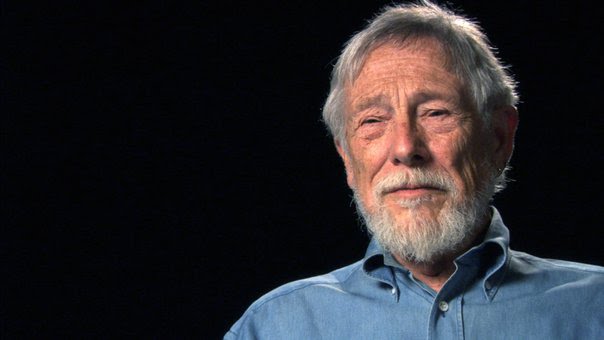

Tuesday, January 11, 2011
Snyder's Etiquette and Momaday's Rainy Mountain
Consider:
Snyder’s “Etiquette of Freedom” and Momaday’s “Rainy mountain” are parallel considerations of our place in nature. Both offer a language through which we might engage our relationship with the world. How do the languages of these texts compare, how do their culturally specific terms offer a new beginning (a la Lopez) or continuation for a (new) ecological consciousness and culture?
MOMADAY, RAINY MOUNTAIN
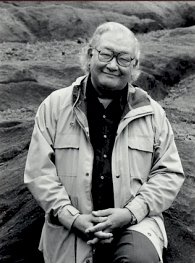
And consider then, Momaday’s book The Way to Rainy Mountain…what is the function of the Prologue, of the Introduction to the book? How does this book cross into the territory that Snyder defines? How does Momaday tell his story through his community? What is Rainy Mountain and what is meant by the Way there?
Snyder’s “Etiquette of Freedom” and Momaday’s “Rainy mountain” are parallel considerations of our place in nature. Both offer a language through which we might engage our relationship with the world. How do the languages of these texts compare, how do their culturally specific terms offer a new beginning (a la Lopez) or continuation for a (new) ecological consciousness and culture?
MOMADAY, RAINY MOUNTAIN
And consider then, Momaday’s book The Way to Rainy Mountain…what is the function of the Prologue, of the Introduction to the book? How does this book cross into the territory that Snyder defines? How does Momaday tell his story through his community? What is Rainy Mountain and what is meant by the Way there?
Monday, January 10, 2011
Sunday, January 09, 2011
Barry Lopez THE REDISCOVERY OF NORTH AMERICA
The first few short chapters of this small book address the
exploitative single mindedness that Christopher Columbus’
“discovery” of North America transported across the Atlantic
and that defined the terms of engagement with the new land
and its inhabitants. Lopez proposes that our existence here,
on this continent, is marked by this first encounter and little
has been done to alter the course as it was set back then, over
500 years ago. He defines the relationship as one in which
“instead of an encounter with ‘the other’ in which we proposed
certain ideas, proposals based on assumptions of equality,
respectfully tendered, our encounters were distinguished by
a stern, relentless imposition of ideas – religious, economic,
and social ideas we deemed superior if not unimpeachable.” (17)
Aside from locating us aboard Columbus’ ship as it neared
the “new world”, Lopez has us imagine what it might have been
like to have been a crew member, a common person, aboard
the ship. Someone employed to support the discovery and
exploitation, yet someone not directly rewarded for his actions
and in turn exploited because of his social status. The author
asks us to imagine the new world, its new life forms, its new
landscape with its inhabitants; and he asks us to imagine how
one faced with such novelty and beauty might remain blind
to it.
Reading on, Lopez takes us into a closer consideration of the
results of the voyage of discovery and the subsequent
settlement of the new world. Once we are brought into closer
proximity to the context he proposes, Lopez further asks us to
reconsider a series of vocabulary words the meaning of which
seems to have been lost or altered to support the erasure of
historical memory. The words include imagination, time, wealth,
residence, habitation, community, local knowledge, along with
the names of plants, animals, peoples, their localities, languages
and cultural traditions. All of these terms gravitate around what
we might come to consider as “a sense of place”, or querencia.
Querencia “refers to a place on the ground where one feels secure,
a place from which one’s strength of character is drawn. It comes
from the verb querer, to desire, but this verb also carries the sense
of accepting a challenge, as in a game.” (39) Finally, given this
definition, this term, this term of reference and residence we must
ask ourselves if we in fact feel secure in the place in which we
have come to rest, if we can call this place our own and, if we
in fact feel the slightest sense of discomfort there, are we up to
the challenge that it offers to make it a better place.
exploitative single mindedness that Christopher Columbus’
“discovery” of North America transported across the Atlantic
and that defined the terms of engagement with the new land
and its inhabitants. Lopez proposes that our existence here,
on this continent, is marked by this first encounter and little
has been done to alter the course as it was set back then, over
500 years ago. He defines the relationship as one in which
“instead of an encounter with ‘the other’ in which we proposed
certain ideas, proposals based on assumptions of equality,
respectfully tendered, our encounters were distinguished by
a stern, relentless imposition of ideas – religious, economic,
and social ideas we deemed superior if not unimpeachable.” (17)
Aside from locating us aboard Columbus’ ship as it neared
the “new world”, Lopez has us imagine what it might have been
like to have been a crew member, a common person, aboard
the ship. Someone employed to support the discovery and
exploitation, yet someone not directly rewarded for his actions
and in turn exploited because of his social status. The author
asks us to imagine the new world, its new life forms, its new
landscape with its inhabitants; and he asks us to imagine how
one faced with such novelty and beauty might remain blind
to it.
Reading on, Lopez takes us into a closer consideration of the
results of the voyage of discovery and the subsequent
settlement of the new world. Once we are brought into closer
proximity to the context he proposes, Lopez further asks us to
reconsider a series of vocabulary words the meaning of which
seems to have been lost or altered to support the erasure of
historical memory. The words include imagination, time, wealth,
residence, habitation, community, local knowledge, along with
the names of plants, animals, peoples, their localities, languages
and cultural traditions. All of these terms gravitate around what
we might come to consider as “a sense of place”, or querencia.
Querencia “refers to a place on the ground where one feels secure,
a place from which one’s strength of character is drawn. It comes
from the verb querer, to desire, but this verb also carries the sense
of accepting a challenge, as in a game.” (39) Finally, given this
definition, this term, this term of reference and residence we must
ask ourselves if we in fact feel secure in the place in which we
have come to rest, if we can call this place our own and, if we
in fact feel the slightest sense of discomfort there, are we up to
the challenge that it offers to make it a better place.
Saturday, January 08, 2011
KEY WORDS

Some Words to Consider in their meaning and usage.
What is Nature? Where is Nature?
What is Nature? Where is Nature?
Nature: one of the most complex words in the English language. Three branches of meaning 1. the essential quality and character of something 2. an inherent force which guides the world or humans 3. the material world itself, with or without human beings. Comes from the a root of nasci (L) meaning to be born which bestows upon it a sense of quality and process before becoming an independent noun. The branch of meaning related to an inherent force is also tied to the presence of a single prime cause...God and as such also the source of natural laws...the constitution of the world, universal and constant recurring force...
The 18th C bring about Nature as the "countryside" as an opposition to the town...nature is what man has not made...Nature-lover and nature-poetry date from this period.
As an expression of the "natural world" NATURE is problematic in the sense that it is difficult to view it objectively without overlaying upon it a conditioned eye. Nature can become an overly romanticized place that nevertheless lies outside of our immediate experience and canno therefore be known except through a mediated eye.
Nature is contrasted to man-made things…which we can eventually extrapolate to be natural since they are part and parcel of man’s “nature” to build, invent and construct.
Culture: This too a complicated word in the language, it also contains a sense of quality and process...it is accompanied by a sense of selection toward making something the norm. To cultivate is to prepare, groom, and selectively help blossom...agriculture therefore is a direct relative to culture as a process of preparing the ground for the proper propagation and production of a final product. Culture, as the aesthetic and intellectual construct we term “ours”…and the nourishing habitat of a “yogurt culture” (Snyder’s example).
Wild, a term that Gary Snyder couples with Free to generate “an American dream-phrase”. And he continues that to be “truly Free one must take on the basic conditions as they are – painful, impermanent, open, imperfect – and then be grateful for impermanence and they freedom it grants us. For in a fixed universe there would be no freedom.”
Wilderness/Wildness, are the places we don’t inhabit, that we set aside as parks and reserves for the former; wildness however can be said to be everywhere. And, possibly, even as wilderness diminishes all around us, wildness might continue to survive all around us. So wildness could be considered a term of energetic life force, a sense of vitality and vibrancy, that is of the natural environment.
Environmental Footprint: The amount of resources consumed by an individual. Does not indicate a "vital" level of consumption, merely consumption. Beginning with the assumption that there are world wide 4.5 biologically productive acres/person, we then calculate what our personal consumption is in relation to that. "The average ecological footprint in the United States is 24 acres per person."...which gives us a good indication of our position as consumers in the world.
Ecological Intelligence: Inversely related to the environmental footprint. Ecological intelligence is founded/developed upon our "conception of place", our relationship to the world and its resources and the recognition that we are dealing with a finite system of interdependent factors. Eco intelligence develops with recognition of interdependence and the increased ability to recognize and learn "the native language of the region."
Saturday, April 24, 2010
Emerson's NATURE
INTRODUCTION
Our age is retrospective. It builds the sepulchres of the fathers. It writes biographies, histories, and criticism. The foregoing generations beheld God and nature face to face; we, through their eyes . Why should not we also enjoy an original relation to the universe? Why should not we have a poetry and philosophy of insight and not of tradition, and a religion by revelation to us, and not the history of theirs? Embosomed for a season in nature, whose floods of life stream around and through us, and invite us by the powers they supply, to action proportioned to nature, why should we grope among the dry bones of the past, or put the living generation into masquerade out of its faded wardrobe? The sun shines to-day also. There is more wool and flax in the fields. There are new lands, new men, new thoughts. Let us demand our own works and laws and worship.
Undoubtedly we have no questions to ask which are unanswerable . We must trust the perfection of the creation so far, as to believe that whatever curiosity the order of things has awakened in our minds, the order of things can satisfy. Every man's condition is a solution in hieroglyphic to those inquiries he would put. He acts it as life, before he apprehends it as truth. In like manner, nature is already, in its forms and tendencies, describing its own design. Let us interrogate the great apparition, that shines so peacefully around us. Let us inquire, to what end is nature?
All science has one aim, namely, to find a theory of nature. We have theories of races and of functions, but scarcely yet a remote approach to an idea of creation. We are now so far from the road to truth, that religious teachers dispute and hate each other, and speculative men are esteemed unsound and frivolous. But to a sound judgment, the most abstract truth is the most practical. Whenever a true theory appears, it will be its own evidence. Its test is, that it will explain all phenomena. Now many are thought not only unexplained but inexplicable; as language, sleep, madness, dreams, beasts, sex.
Philosophically considered, the universe is composed of Nature and the Soul. Strictly speaking, therefore, all that is separate from us, all which Philosophy distinguishes as the NOT ME, that is, both nature and art, all other men and my own body, must be ranked under this name, NATURE. In enumerating the values of nature and casting up their sum, I shall use the word in both senses; -- in its common and in its philosophical import. In inquiries so general as our present one, the inaccuracy is not material; no confusion of thought will occur. Nature, in the common sense, refers to essences unchanged by man; space, the air, the river, the leaf. Art is applied to the mixture of his will with the same things, as in a house, a canal, a statue, a picture. But his operations taken together are so insignificant , a little chipping, baking, patching, and washing, that in an impression so grand as that of the world on the human mind, they do not vary the result.
Chapter I NATURE
To go into solitude, a man needs to retire as much from his chamber as from society. I am not solitary whilst I read and write, though nobody is with me. But if a man would be alone, let him look at the stars. The rays that come from those heavenly worlds, will separate between him and what he touches. One might think the atmosphere was made transparent with this design, to give man, in the heavenly bodies, the perpetual presence of the sublime. Seen in the streets of cities, how great they are! If the stars should appear one night in a thousand years, how would men believe and adore; and preserve for many generations the remembrance of the city of God which had been shown! But every night come out these envoys of beauty, and light the universe with their admonishing smile.
The stars awaken a certain reverence, because though always present, they are inaccessible; but all natural objects make a kindred impression, when the mind is open to their influence. Nature never wears a mean appearance. Neither does the wisest man extort her secret, and lose his curiosity by finding out all her perfection. Nature never became a toy to a wise spirit. The flowers, the animals, the mountains, reflected the wisdom of his best hour, as much as they had delighted the simplicity of his childhood.
When we speak of nature in this manner, we have a distinct but most poetical sense in the mind. We mean the integrity of impression made by manifold natural objects. It is this which distinguishes the stick of timber of the wood-cutter, from the tree of the poet. The charming landscape which I saw this morning, is indubitably made up of some twenty or thirty farms. Miller owns this field, Locke that, and Manning the woodland beyond. But none of them owns the landscape. There is a property in the horizon which no man has but he whose eye can integrate all the parts, that is, the poet. This is the best part of these men's farms, yet to this their warranty-deeds give no title.
To speak truly, few adult persons can see nature. Most persons do not see the sun. At least they have a very superficial seeing. The sun illuminates only the eye of the man, but shines into the eye and the heart of the child. The lover of nature is he whose inward and outward senses are still truly adjusted to each other; who has retained the spirit of infancy even into the era of manhood. His intercourse with heaven and earth, becomes part of his daily food. In the presence of nature, a wild delight runs through the man, in spite of real sorrows. Nature says, -- he is my creature, and maugre all his impertinent griefs, he shall be glad with me. Not the sun or the summer alone, but every hour and season yields its tribute of delight; for every hour and change corresponds to and authorizes a different state of the mind, from breathless noon to grimmest midnight. Nature is a setting that fits equally well a comic or a mourning piece. In good health, the air is a cordial of incredible virtue. Crossing a bare common, in snow puddles, at twilight, under a clouded sky, without having in my thoughts any occurrence of special good fortune, I have enjoyed a perfect exhilaration.I am glad to the brink of fear. In the woods too, a man casts off his years, as the snake his slough , and at what period soever of life, is always a child. In the woods, is perpetual youth. Within these plantations of God, a decorum and sanctity reign, a perennial festival is dressed, and the guest sees not how he should tire of them in a thousand years. In the woods, we return to reason and faith. There I feel that nothing can befall me in life, -- no disgrace, no calamity, (leaving me my eyes,) which nature cannot repair. Standing on the bare ground, -- my head bathed by the blithe air, and uplifted into infinite space, -- all mean egotism vanishes. I become a transparent eye-ball; I am nothing; I see all; the currents of the Universal Being circulate through me; I am part or particle of God. The name of the nearest friend sounds then foreign and accidental: to be brothers, to be acquaintances, -- master or servant, is then a trifle and a disturbance. I am the lover of uncontained and immortal beauty.In the wilderness, I find something more dear and connate than in streets or villages. In the tranquil landscape, and especially in the distant line of the horizon, man beholds somewhat as beautiful as his own nature.
The greatest delight which the fields and woods minister, is the suggestion of an occult relation between man and the vegetable. I am not alone and unacknowledged. They nod to me, and I to them. The waving of the boughs in the storm, is new to me and old. It takes me by surprise, and yet is not unknown. Its effect is like that of a higher thought or a better emotion coming over me, when I deemed I was thinking justly or doing right.
Yet it is certain that the power to produce this delight, does not reside in nature, but in man, or in a harmony of both. It is necessary to use these pleasures with great temperance. For, nature is not always tricked in holiday attire, but the same scene which yesterday breathed perfume and glittered as for the frolic of the nymphs, is overspread with melancholy today. Nature always wears the colors of the spirit . To a man laboring under calamity, the heat of his own fire hath sadness in it. Then, there is a kind of contempt of the landscape felt by him who has just lost by death a dear friend. The sky is less grand as it shuts down over less worth in the population.
Click on the title to go to Trancendentalism Website and the rest of "Nature"
Our age is retrospective. It builds the sepulchres of the fathers. It writes biographies, histories, and criticism. The foregoing generations beheld God and nature face to face; we, through their eyes . Why should not we also enjoy an original relation to the universe? Why should not we have a poetry and philosophy of insight and not of tradition, and a religion by revelation to us, and not the history of theirs? Embosomed for a season in nature, whose floods of life stream around and through us, and invite us by the powers they supply, to action proportioned to nature, why should we grope among the dry bones of the past, or put the living generation into masquerade out of its faded wardrobe? The sun shines to-day also. There is more wool and flax in the fields. There are new lands, new men, new thoughts. Let us demand our own works and laws and worship.
Undoubtedly we have no questions to ask which are unanswerable . We must trust the perfection of the creation so far, as to believe that whatever curiosity the order of things has awakened in our minds, the order of things can satisfy. Every man's condition is a solution in hieroglyphic to those inquiries he would put. He acts it as life, before he apprehends it as truth. In like manner, nature is already, in its forms and tendencies, describing its own design. Let us interrogate the great apparition, that shines so peacefully around us. Let us inquire, to what end is nature?
All science has one aim, namely, to find a theory of nature. We have theories of races and of functions, but scarcely yet a remote approach to an idea of creation. We are now so far from the road to truth, that religious teachers dispute and hate each other, and speculative men are esteemed unsound and frivolous. But to a sound judgment, the most abstract truth is the most practical. Whenever a true theory appears, it will be its own evidence. Its test is, that it will explain all phenomena. Now many are thought not only unexplained but inexplicable; as language, sleep, madness, dreams, beasts, sex.
Philosophically considered, the universe is composed of Nature and the Soul. Strictly speaking, therefore, all that is separate from us, all which Philosophy distinguishes as the NOT ME, that is, both nature and art, all other men and my own body, must be ranked under this name, NATURE. In enumerating the values of nature and casting up their sum, I shall use the word in both senses; -- in its common and in its philosophical import. In inquiries so general as our present one, the inaccuracy is not material; no confusion of thought will occur. Nature, in the common sense, refers to essences unchanged by man; space, the air, the river, the leaf. Art is applied to the mixture of his will with the same things, as in a house, a canal, a statue, a picture. But his operations taken together are so insignificant , a little chipping, baking, patching, and washing, that in an impression so grand as that of the world on the human mind, they do not vary the result.
Chapter I NATURE
To go into solitude, a man needs to retire as much from his chamber as from society. I am not solitary whilst I read and write, though nobody is with me. But if a man would be alone, let him look at the stars. The rays that come from those heavenly worlds, will separate between him and what he touches. One might think the atmosphere was made transparent with this design, to give man, in the heavenly bodies, the perpetual presence of the sublime. Seen in the streets of cities, how great they are! If the stars should appear one night in a thousand years, how would men believe and adore; and preserve for many generations the remembrance of the city of God which had been shown! But every night come out these envoys of beauty, and light the universe with their admonishing smile.
The stars awaken a certain reverence, because though always present, they are inaccessible; but all natural objects make a kindred impression, when the mind is open to their influence. Nature never wears a mean appearance. Neither does the wisest man extort her secret, and lose his curiosity by finding out all her perfection. Nature never became a toy to a wise spirit. The flowers, the animals, the mountains, reflected the wisdom of his best hour, as much as they had delighted the simplicity of his childhood.
When we speak of nature in this manner, we have a distinct but most poetical sense in the mind. We mean the integrity of impression made by manifold natural objects. It is this which distinguishes the stick of timber of the wood-cutter, from the tree of the poet. The charming landscape which I saw this morning, is indubitably made up of some twenty or thirty farms. Miller owns this field, Locke that, and Manning the woodland beyond. But none of them owns the landscape. There is a property in the horizon which no man has but he whose eye can integrate all the parts, that is, the poet. This is the best part of these men's farms, yet to this their warranty-deeds give no title.
To speak truly, few adult persons can see nature. Most persons do not see the sun. At least they have a very superficial seeing. The sun illuminates only the eye of the man, but shines into the eye and the heart of the child. The lover of nature is he whose inward and outward senses are still truly adjusted to each other; who has retained the spirit of infancy even into the era of manhood. His intercourse with heaven and earth, becomes part of his daily food. In the presence of nature, a wild delight runs through the man, in spite of real sorrows. Nature says, -- he is my creature, and maugre all his impertinent griefs, he shall be glad with me. Not the sun or the summer alone, but every hour and season yields its tribute of delight; for every hour and change corresponds to and authorizes a different state of the mind, from breathless noon to grimmest midnight. Nature is a setting that fits equally well a comic or a mourning piece. In good health, the air is a cordial of incredible virtue. Crossing a bare common, in snow puddles, at twilight, under a clouded sky, without having in my thoughts any occurrence of special good fortune, I have enjoyed a perfect exhilaration.I am glad to the brink of fear. In the woods too, a man casts off his years, as the snake his slough , and at what period soever of life, is always a child. In the woods, is perpetual youth. Within these plantations of God, a decorum and sanctity reign, a perennial festival is dressed, and the guest sees not how he should tire of them in a thousand years. In the woods, we return to reason and faith. There I feel that nothing can befall me in life, -- no disgrace, no calamity, (leaving me my eyes,) which nature cannot repair. Standing on the bare ground, -- my head bathed by the blithe air, and uplifted into infinite space, -- all mean egotism vanishes. I become a transparent eye-ball; I am nothing; I see all; the currents of the Universal Being circulate through me; I am part or particle of God. The name of the nearest friend sounds then foreign and accidental: to be brothers, to be acquaintances, -- master or servant, is then a trifle and a disturbance. I am the lover of uncontained and immortal beauty.In the wilderness, I find something more dear and connate than in streets or villages. In the tranquil landscape, and especially in the distant line of the horizon, man beholds somewhat as beautiful as his own nature.
The greatest delight which the fields and woods minister, is the suggestion of an occult relation between man and the vegetable. I am not alone and unacknowledged. They nod to me, and I to them. The waving of the boughs in the storm, is new to me and old. It takes me by surprise, and yet is not unknown. Its effect is like that of a higher thought or a better emotion coming over me, when I deemed I was thinking justly or doing right.
Yet it is certain that the power to produce this delight, does not reside in nature, but in man, or in a harmony of both. It is necessary to use these pleasures with great temperance. For, nature is not always tricked in holiday attire, but the same scene which yesterday breathed perfume and glittered as for the frolic of the nymphs, is overspread with melancholy today. Nature always wears the colors of the spirit . To a man laboring under calamity, the heat of his own fire hath sadness in it. Then, there is a kind of contempt of the landscape felt by him who has just lost by death a dear friend. The sky is less grand as it shuts down over less worth in the population.
Click on the title to go to Trancendentalism Website and the rest of "Nature"

Friday, April 23, 2010


Sunday, February 28, 2010
Anza Borrego
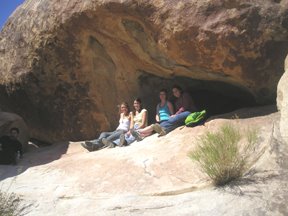
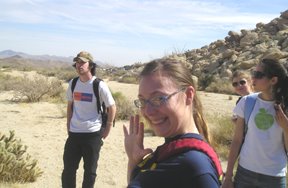
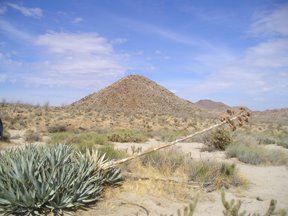
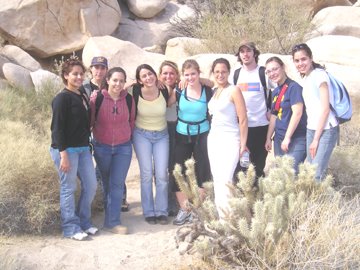
Photos by Christina C.
Environmental Literature class field trip to Anza Borrego Park, Feb. 26, 2006
After so much reading and talking inside the stuffy rooms of the university
we finally get out into the fresh air. Ocotillos, harvester ants, ravens, agaves, sand and stone,
boulders, caves and pictographs...a full day.
Subscribe to:
Posts (Atom)