Sunday, February 03, 2013

Tuesday, January 01, 2013
Saturday, May 26, 2012


Wednesday, June 08, 2011
Tuesday, June 07, 2011
Wednesday, April 27, 2011
Earth Day Special: Vandana Shiva and Maude Barlow on the Rights of Mother Earth
A good message for President Obama at the end of this interview.
Monday, March 14, 2011

Friday, March 11, 2011

Monday, February 28, 2011
Monday, February 21, 2011
Wednesday, February 09, 2011
LEOPOLD QUESTION 1
PLEASE READ THE SECTIONS BELOW AND THOSE SUGGESTED IN THE SYLLABUS UNDER THE WEEKLY READING SCHEDULE AND COMMENT ON THE FOLLOWING HEREIN:
1. WHAT DOES THE TITLE OF THE BOOK SAND COUNTY ALMANAC SUGGEST?
LEOPOLD QUESTION 2
2. WHAT IS THE SEASONAL ARRANGEMENT OF THE FIRST PORTION OF THE BOOK MEANT TO COMMUNICATE?
Friday, January 28, 2011
John Coltrane
“All a musician can do is to get closer to the sources of nature,
and so feel that he is in communion with the natural laws.” -John Coltrane
Thursday, January 13, 2011


Tuesday, January 11, 2011
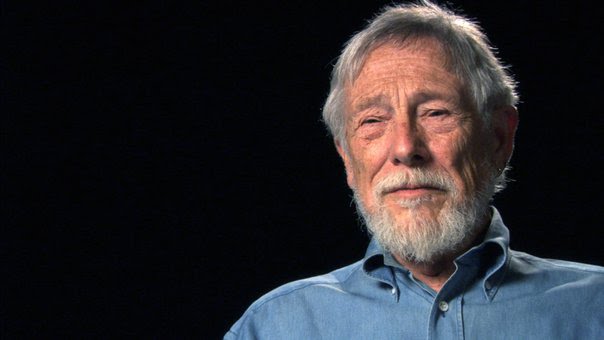
Snyder's Etiquette and Momaday's Rainy Mountain
Consider:
Snyder’s “Etiquette of Freedom” and Momaday’s “Rainy mountain” are parallel considerations of our place in nature. Both offer a language through which we might engage our relationship with the world. How do the languages of these texts compare, how do their culturally specific terms offer a new beginning (a la Lopez) or continuation for a (new) ecological consciousness and culture?
MOMADAY, RAINY MOUNTAIN
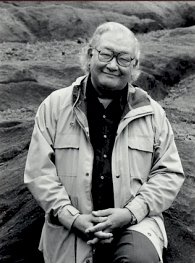
And consider then, Momaday’s book The Way to Rainy Mountain…what is the function of the Prologue, of the Introduction to the book? How does this book cross into the territory that Snyder defines? How does Momaday tell his story through his community? What is Rainy Mountain and what is meant by the Way there?
Snyder’s “Etiquette of Freedom” and Momaday’s “Rainy mountain” are parallel considerations of our place in nature. Both offer a language through which we might engage our relationship with the world. How do the languages of these texts compare, how do their culturally specific terms offer a new beginning (a la Lopez) or continuation for a (new) ecological consciousness and culture?
MOMADAY, RAINY MOUNTAIN
And consider then, Momaday’s book The Way to Rainy Mountain…what is the function of the Prologue, of the Introduction to the book? How does this book cross into the territory that Snyder defines? How does Momaday tell his story through his community? What is Rainy Mountain and what is meant by the Way there?
Monday, January 10, 2011
Sunday, January 09, 2011
Barry Lopez THE REDISCOVERY OF NORTH AMERICA
The first few short chapters of this small book address the
exploitative single mindedness that Christopher Columbus’
“discovery” of North America transported across the Atlantic
and that defined the terms of engagement with the new land
and its inhabitants. Lopez proposes that our existence here,
on this continent, is marked by this first encounter and little
has been done to alter the course as it was set back then, over
500 years ago. He defines the relationship as one in which
“instead of an encounter with ‘the other’ in which we proposed
certain ideas, proposals based on assumptions of equality,
respectfully tendered, our encounters were distinguished by
a stern, relentless imposition of ideas – religious, economic,
and social ideas we deemed superior if not unimpeachable.” (17)
Aside from locating us aboard Columbus’ ship as it neared
the “new world”, Lopez has us imagine what it might have been
like to have been a crew member, a common person, aboard
the ship. Someone employed to support the discovery and
exploitation, yet someone not directly rewarded for his actions
and in turn exploited because of his social status. The author
asks us to imagine the new world, its new life forms, its new
landscape with its inhabitants; and he asks us to imagine how
one faced with such novelty and beauty might remain blind
to it.
Reading on, Lopez takes us into a closer consideration of the
results of the voyage of discovery and the subsequent
settlement of the new world. Once we are brought into closer
proximity to the context he proposes, Lopez further asks us to
reconsider a series of vocabulary words the meaning of which
seems to have been lost or altered to support the erasure of
historical memory. The words include imagination, time, wealth,
residence, habitation, community, local knowledge, along with
the names of plants, animals, peoples, their localities, languages
and cultural traditions. All of these terms gravitate around what
we might come to consider as “a sense of place”, or querencia.
Querencia “refers to a place on the ground where one feels secure,
a place from which one’s strength of character is drawn. It comes
from the verb querer, to desire, but this verb also carries the sense
of accepting a challenge, as in a game.” (39) Finally, given this
definition, this term, this term of reference and residence we must
ask ourselves if we in fact feel secure in the place in which we
have come to rest, if we can call this place our own and, if we
in fact feel the slightest sense of discomfort there, are we up to
the challenge that it offers to make it a better place.
exploitative single mindedness that Christopher Columbus’
“discovery” of North America transported across the Atlantic
and that defined the terms of engagement with the new land
and its inhabitants. Lopez proposes that our existence here,
on this continent, is marked by this first encounter and little
has been done to alter the course as it was set back then, over
500 years ago. He defines the relationship as one in which
“instead of an encounter with ‘the other’ in which we proposed
certain ideas, proposals based on assumptions of equality,
respectfully tendered, our encounters were distinguished by
a stern, relentless imposition of ideas – religious, economic,
and social ideas we deemed superior if not unimpeachable.” (17)
Aside from locating us aboard Columbus’ ship as it neared
the “new world”, Lopez has us imagine what it might have been
like to have been a crew member, a common person, aboard
the ship. Someone employed to support the discovery and
exploitation, yet someone not directly rewarded for his actions
and in turn exploited because of his social status. The author
asks us to imagine the new world, its new life forms, its new
landscape with its inhabitants; and he asks us to imagine how
one faced with such novelty and beauty might remain blind
to it.
Reading on, Lopez takes us into a closer consideration of the
results of the voyage of discovery and the subsequent
settlement of the new world. Once we are brought into closer
proximity to the context he proposes, Lopez further asks us to
reconsider a series of vocabulary words the meaning of which
seems to have been lost or altered to support the erasure of
historical memory. The words include imagination, time, wealth,
residence, habitation, community, local knowledge, along with
the names of plants, animals, peoples, their localities, languages
and cultural traditions. All of these terms gravitate around what
we might come to consider as “a sense of place”, or querencia.
Querencia “refers to a place on the ground where one feels secure,
a place from which one’s strength of character is drawn. It comes
from the verb querer, to desire, but this verb also carries the sense
of accepting a challenge, as in a game.” (39) Finally, given this
definition, this term, this term of reference and residence we must
ask ourselves if we in fact feel secure in the place in which we
have come to rest, if we can call this place our own and, if we
in fact feel the slightest sense of discomfort there, are we up to
the challenge that it offers to make it a better place.
Subscribe to:
Posts (Atom)